Nicknamed “Criquette,” Christiane Head is one of the leading figures in French horse racing. She is also a pioneer in a world long dominated by men. In 1979, she made history by becoming the first wom

Forty years after winning it as a trainer, Christiane Head dreams of winning it as an owner
 Forty years after winning it as a trainer, Christiane Head dreams of winning it as an owner
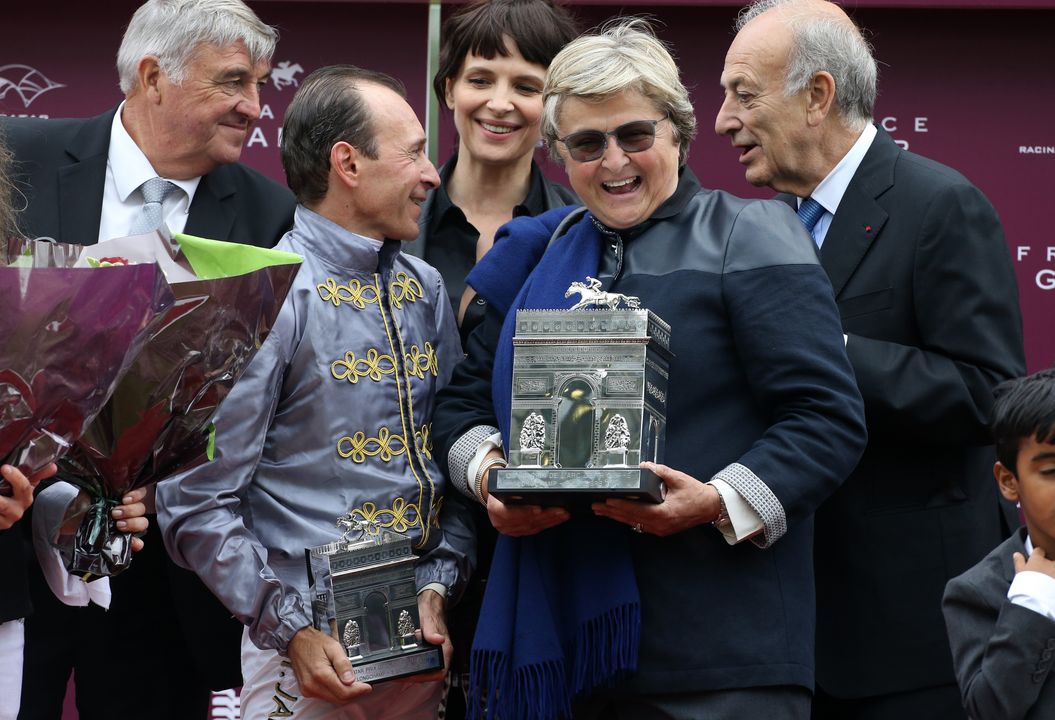
Nicknamed “Criquette,” Christiane Head is one of the leading figures in French horse racing. She is also a pioneer in a world long dominated by men. In 1979, she made history by becoming the first woman to win the Prix de l’Arc de Triomphe thanks to the champion filly Three Troikas.
Born into the famous Head family — her father Alec Head, who passed away in 2022, being regarded as one of the major figures in world racing during the 20th century — she grew up surrounded by horses and obtained her trainer’s license in 1977.
During her career, she accumulated more than 128 Group 1 victories with champions such as the legendary Trêve, dual winner of the Qatar Prix de l’Arc de Triomphe.
Retired from training since 2018, Criquette Head remains a major and highly respected figure in French racing, particularly committed to defending smaller stables and racing professionals.
Regarding the Prix du Jockey Club specifically, she won it in 1986 as a trainer with Bering, who carried the colors of her mother, Ghislaine Head. Forty years later, Pearled Majesty could now offer her a first Qatar Prix du Jockey Club victory as an owner.
“At the time, with Freddy [Head, Criquette’s brother], we bought Pearled Majesty’s dam. Then, when the family’s Haras du Quesnay was sold and all the horses went through the sales ring, the mare came into the ring with her foal at foot and was already carrying this horse. It was a mating that we ourselves had decided upon. Later, I bought back the foal, a filly I liked very much because it is a family I am deeply attached to. Then Fernando [Laffon, Criquette’s grandson], who was in England, called me to say that this horse was going through the sales. He went to see him, liked him enormously, and we decided to buy him. Mauricio had exactly the same impression when he first saw the horse. That is how we became partners around him. Naturally, Mauricio kept him in training.
Stopping training was difficult, of course. And I still miss it today. I would still love to come every morning to Chantilly, but I live too far away for that now. Today, I am an owner and I let the trainers work. I know too well what this profession represents to interfere unnecessarily. A trainer’s life is extremely complicated: you have to be there every day, understand your horses, cope with the pressure of results and sometimes also with the pressure from owners. So I certainly do not want to add stress to my trainers. On the contrary, I trust them completely.
Mauricio knows this horse perfectly. He is the one who shaped him and brought him to this level. The colt was not easy at first, he was somewhat immature, and Mauricio has done a fantastic job with him. I am delighted that he is training him and also delighted to have found a horse capable of running in such a race. When you buy a yearling or a foal, you never know how far they will go. So to find yourself at the start of a Jockey Club is already something fantastic. Personally, I have never liked looking for excuses. When I was a trainer, neither the draw nor the ground ever frightened me. If a horse is good enough, he can win under any conditions. I won the Prix de l’Arc de Triomphe from stall number 22, so I have never believed in excuses. I also believe jockeys should be allowed to ride horses according to their own instincts. They are the ones on the horse’s back and the best placed to feel what needs to be done during the race.
Being an owner today is different. The stress is not the same because I do not see the horse every day. I visit him from time to time in Chantilly, but all the daily responsibility belongs to the trainer. I can therefore enjoy the emotions more. Of course, winning the Jockey Club as an owner would be wonderful. I would be over the moon. But the most important thing is that the horse comes back safely from his race. Everything that happens on Sunday will be a bonus.
Today, my life is much calmer. I am retired, I divide my time between France, Switzerland and the Bahamas, and above all I enjoy my family, my children, my grandchildren and even my great-grandchildren. But racing remains a tremendous passion and it will always be part of my life.”
Photo: Jean Catuffe/Getty Images
 Superstar jockey Blake Shinn nears long-awaited comeback